Crédit Agricole CIB Client relations
Product Designer within the Crédit Agricole CIB design studio. I led the design of Optimall, the portal connecting clients with their investment bankers, paired with a Lead Designer.
- Role
- Product Designer
- Company
- Crédit Agricole CIB
- Year
- 2024
- Tools
- Figma / Figjam / Confluence / Jira
- Focus
- Product design / Digital transformation / Design system / Prototyping
Context
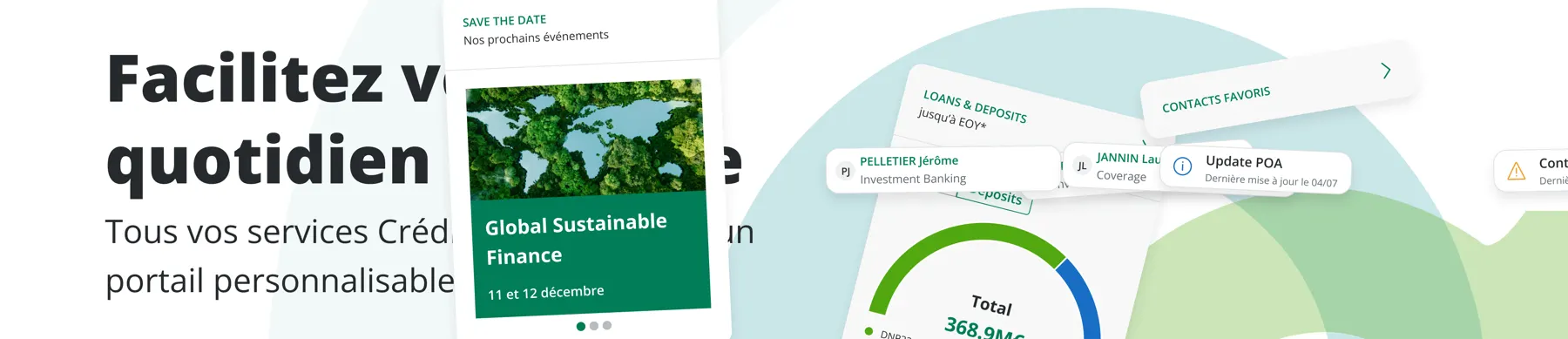
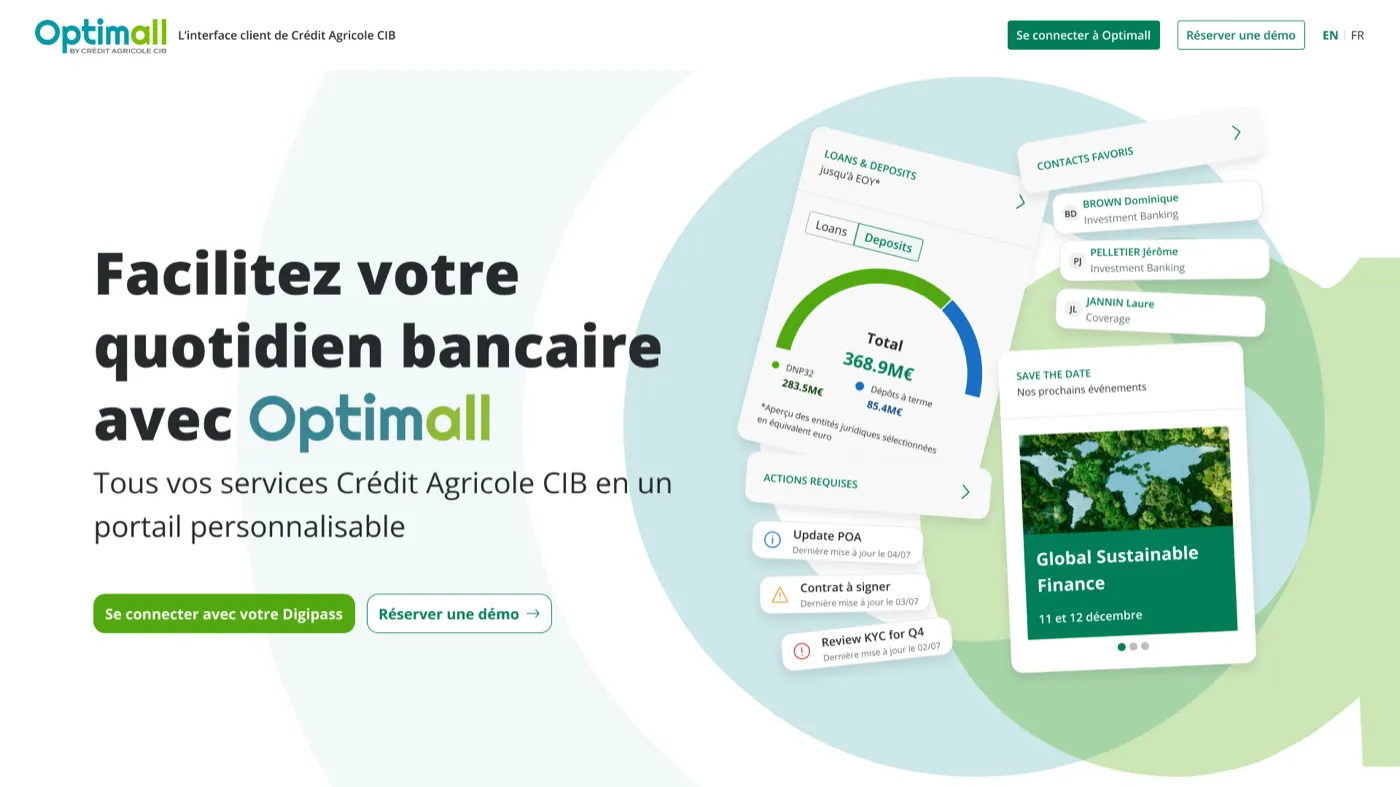
Optimall is a digital platform offered by Crédit Agricole CIB (CA-CIB), the corporate and investment banking arm of Crédit Agricole. It gives clients access to the bank’s information, products and digital services, making their financial needs easier to manage.
I joined the Optimall project at CA-CIB to improve and grow the platform, on both the design and the methodology side.
The design team was myself and a Lead Designer. The wider team was made up of two squads bringing together product owners, business analysts, project managers and developers (front and back). All told, around thirty people worked on Optimall.
Agile maturity, however, was not there, and part of our mission was to shift the stakeholders themselves, to bring them into Agile and design practice.
Audit
To pin the need down properly, we looked at three angles:
Current problem
Design and usability debt on the platform, and method debt left by previous designers inside Figma too (use of design tokens, file organisation and so on).
The objective
Bring our design expertise to bear on real user needs, and establish the weight design deserves.
Secondary objective
Set a digital transformation in motion, so the teams grow into the right methods and stop iterating on gut feeling.
Where things stood
To work effectively and meaningfully, and to be able to transform anything afterwards, I first had to analyse and understand how the teams operated, in order to work with the grain rather than against it.
The initial aim was to genuinely understand the designer’s role within the teams: what was already in place, and what would need to change.
When I arrived, the designer held a fairly executional role, driven by stakeholder intuition, without co-design workshops or any real analysis of user behaviour.
So the goal became shifting the place and the role of the designer on the project. All of it within a fairly short window.
What we put in place
To establish the designer’s pivotal role, we started by reorganising the stages at which we step into a subject, so that the craft would carry properly.
That meant earning the stakeholders’ trust, clearing the design debt sitting in Figma, and starting to run workshops with the business teams, as a first step towards design maturity.
The challenge was real, because we had to show the stakeholders that going back to a divergence phase in order to converge better would pay off in the end.
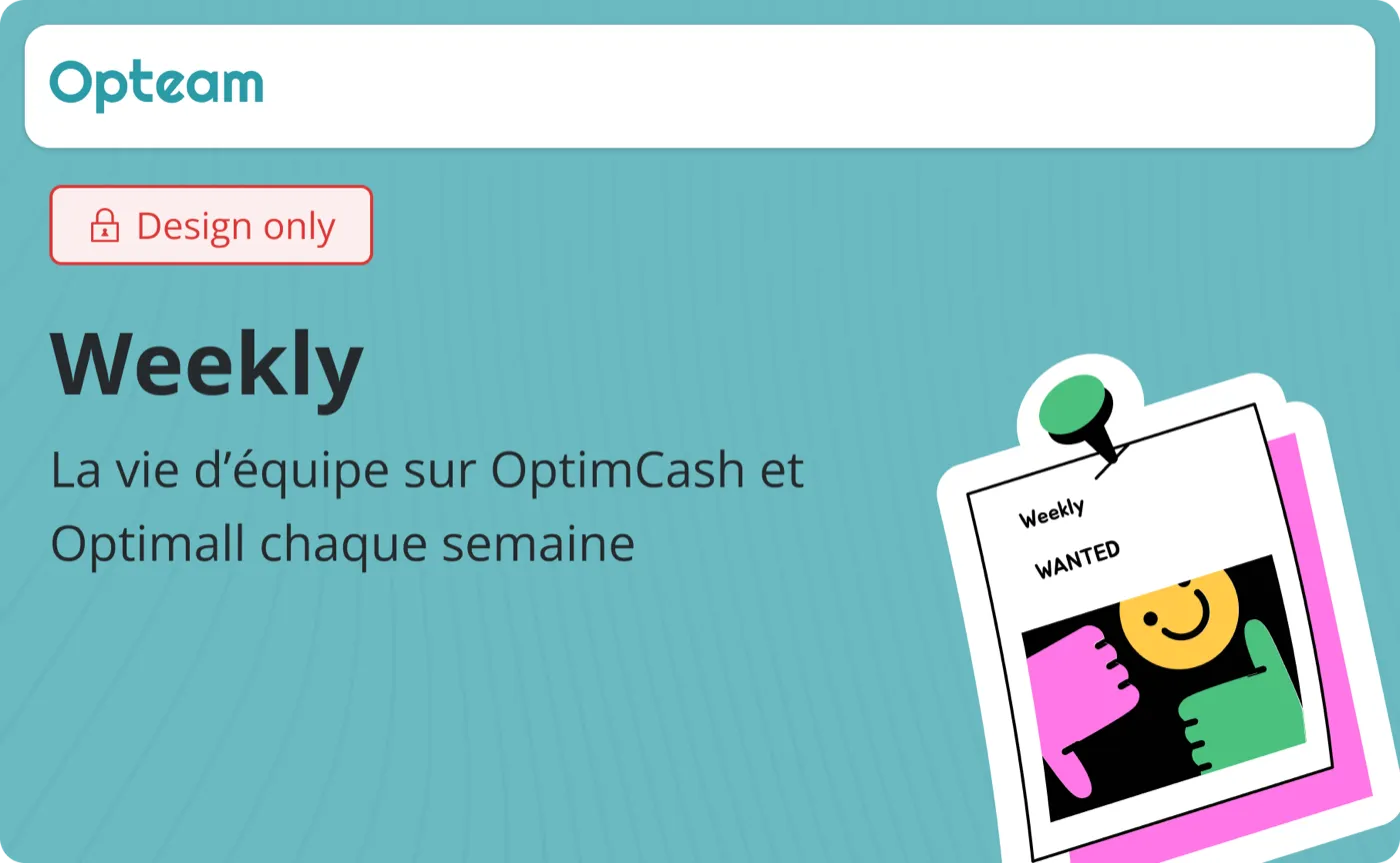
I also proposed a new weekly format between designers, sharper than the previous one, to get real value out of that meeting and strengthen how the designers held together as a group.
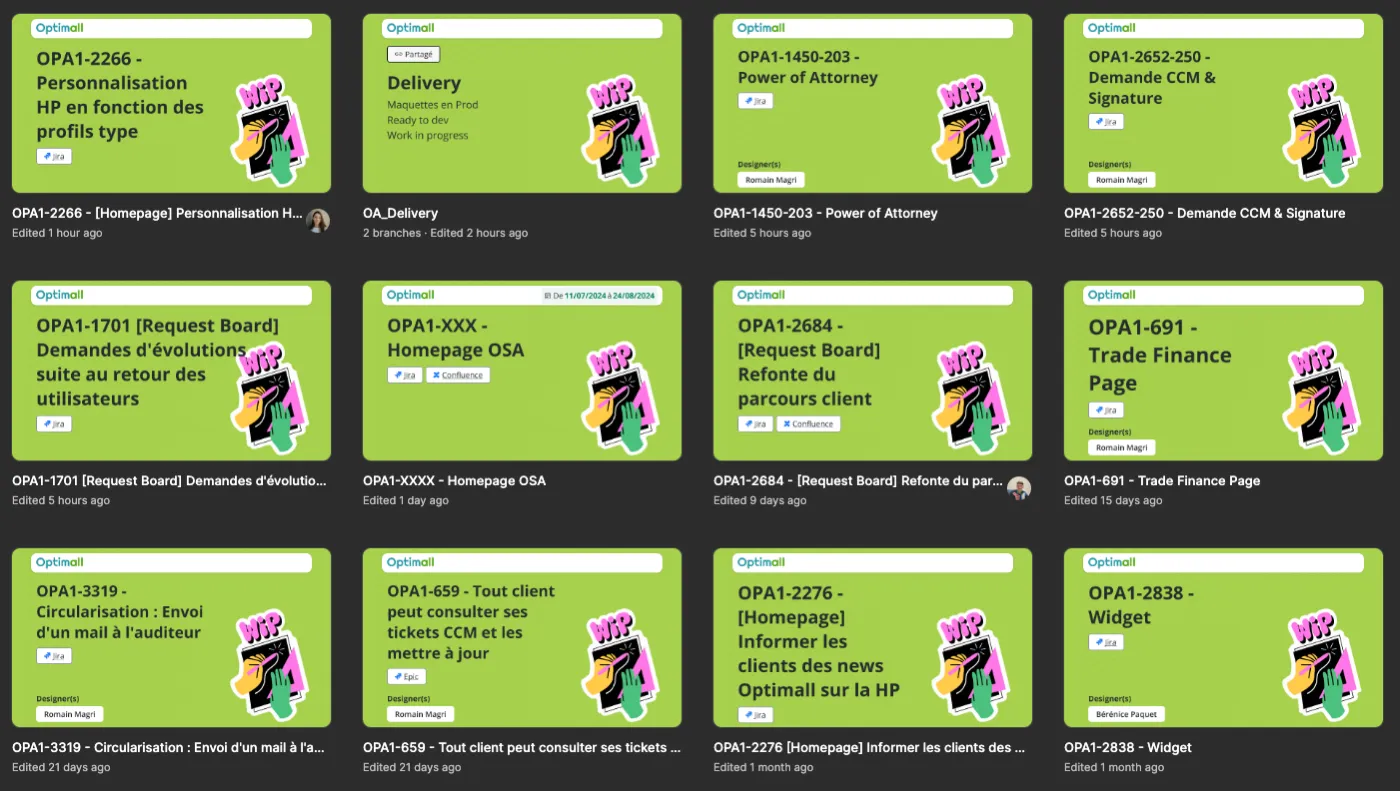
Alongside that, I built a new way of organising Figma, one that kept files consistent with the EPICs while keeping the business teams involved, so that everyone shared responsibility for how new features came to life.
We started out with a single file holding every mockup. That had stopped being workable: we no longer knew how to sort them, how to handle versioning, and nothing was structured any more. We had lost track of what was built and what wasn’t.
One file per EPIC was the logical answer to me, since it let us keep the latest mockups current without mixing everything together. Each file held several pages, so any stakeholder could tell where to look for what they needed.
The file covers were designed so that everything relevant to a given EPIC could be found on them.
The work itself
Beyond reworking the design process, I did of course design. Ideation and co-design workshops were not a habit on the project, so I tried to establish them with the various stakeholders. That would begin to mark a first step into the transformation we were after. In parallel, the lead designer started user interviews and user testing, neither of which had existed before.
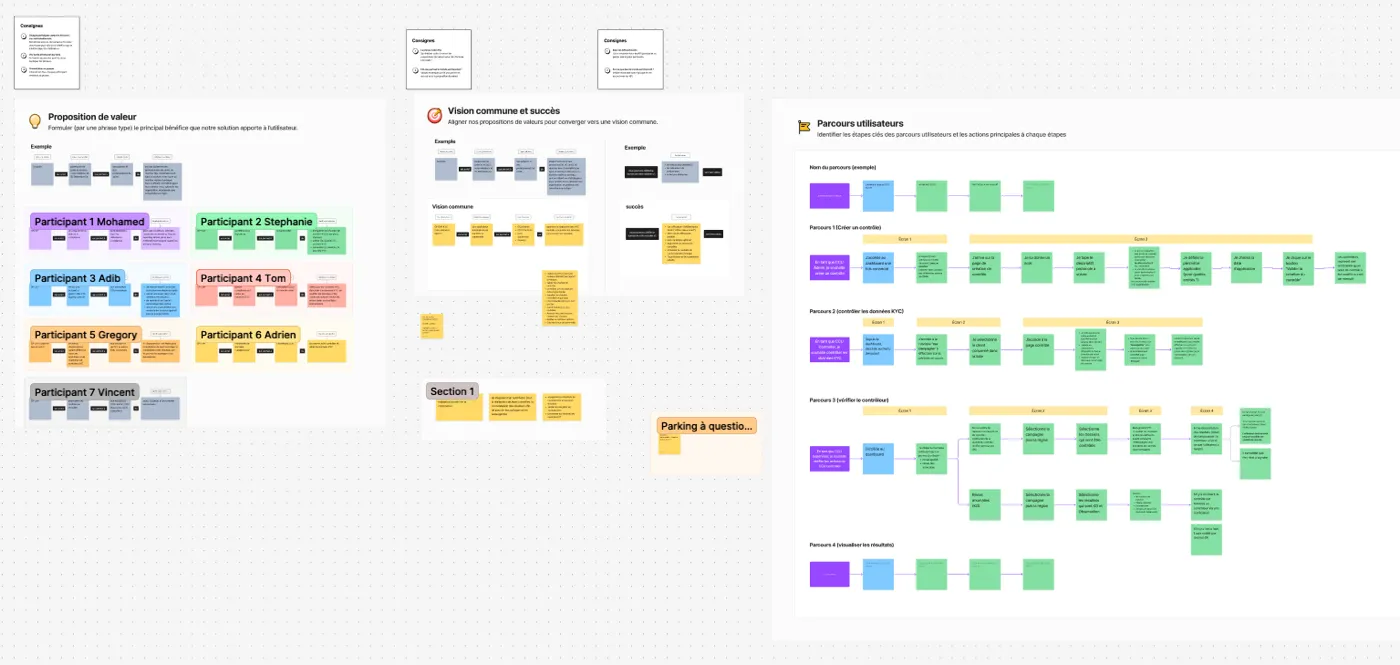
Those workshops fed into UI work in Figma, specifically mockups and prototypes.
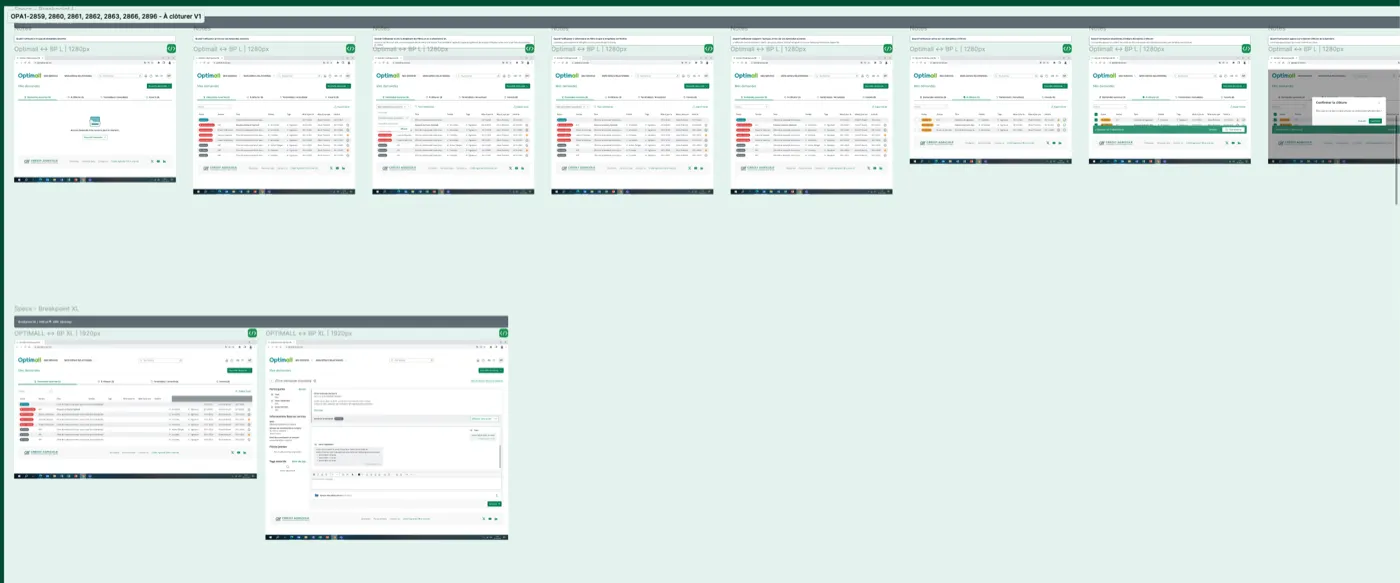
As a member of the Crédit Agricole CIB Design System guild, I also worked with the Design System team on its ongoing evolution, with the advantage of using it daily myself. That meant building components and documenting them, but also taking part in sessions such as the debrief of an audit run a few months earlier, to align our views and act on what the Design System’s users were asking for.
Design System aside, projects at Crédit Agricole CIB run in a slightly particular way. We use the Design System as far as it goes, but some projects need highly specific components that the shared library does not carry. So we created a library dedicated to Optimall, holding the components that are absent from the Design System yet useful and indispensable to the project.
Conclusion
Coming onto this project, starting that digital transformation mattered to me, given where their maturity stood. I tried to put processes and structures in place to help it along. Today the teams are happy with how the files are organised and they keep using the method. The clean-up of the older files was not finished, and the teams are still putting real effort into cutting that design debt down.
Ideation workshops, meanwhile, are becoming the norm and have now taken their place in how new features get built.
And my work within the Design System guild let me dig into a subject I’m passionate about, in a setting far larger than a start-up, where I had been before.
« I was lucky to have Tom on my team and I don’t regret it for a second. Tom is a driven, proactive person, with a refreshing candour and his head firmly on his shoulders. He’s also genuinely human, the kind of person who gives the words “building a team” their full meaning. Beyond his undeniable UI and Design System skills, he’s the sort of personality you want on your team, because he pulls everyone else forward, whatever their rank. Thank you Tom, and all the best for what comes next! »